Resources

Download & share.

Seven gentle infographics, free to download and share. Pin one above your desk, send one to a friend, or print one for the days that feel heavier than the others.
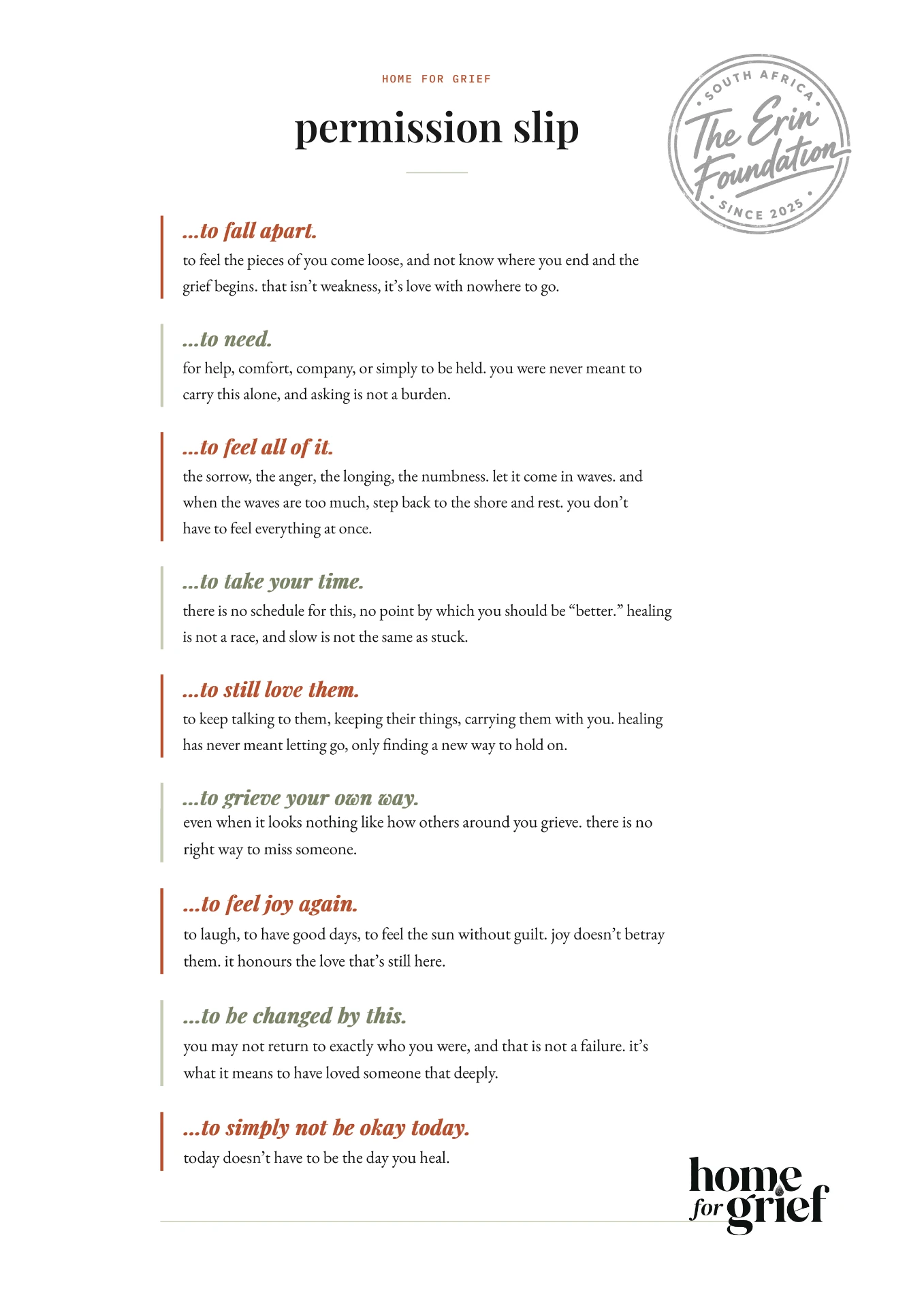
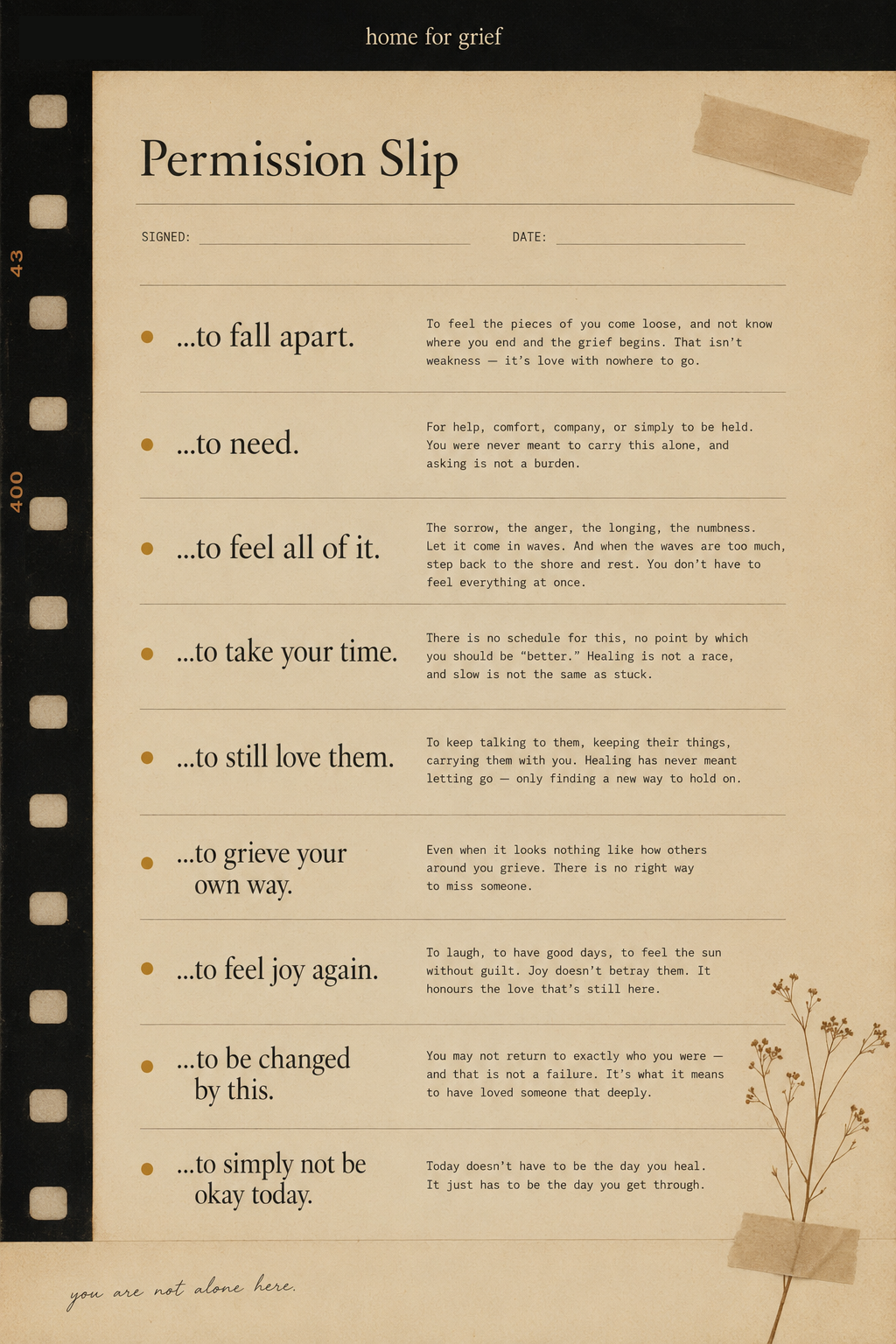
A Permission Slip from Home for Grief, in deep indigo with torn-paper strips. It grants permission: to fall apart, because that is not weakness but love with nowhere to go; to need help, comfort and company, because you were never meant to carry this alone; to feel all of it (sorrow, anger, longing, numbness) and to rest when the waves are too much; to take your time, because healing is not a race and slow is not the same as stuck; to still love them and find a new way to hold on; to grieve your own way, because there is no right way to miss someone; to feel joy again without guilt, because joy honours the love still here; to be changed by this; and to simply not be okay today.

A Permission Slip

Some days, grief needs permission more than advice. This is a gentle reminder of all the things you are allowed to feel and be while you grieve.
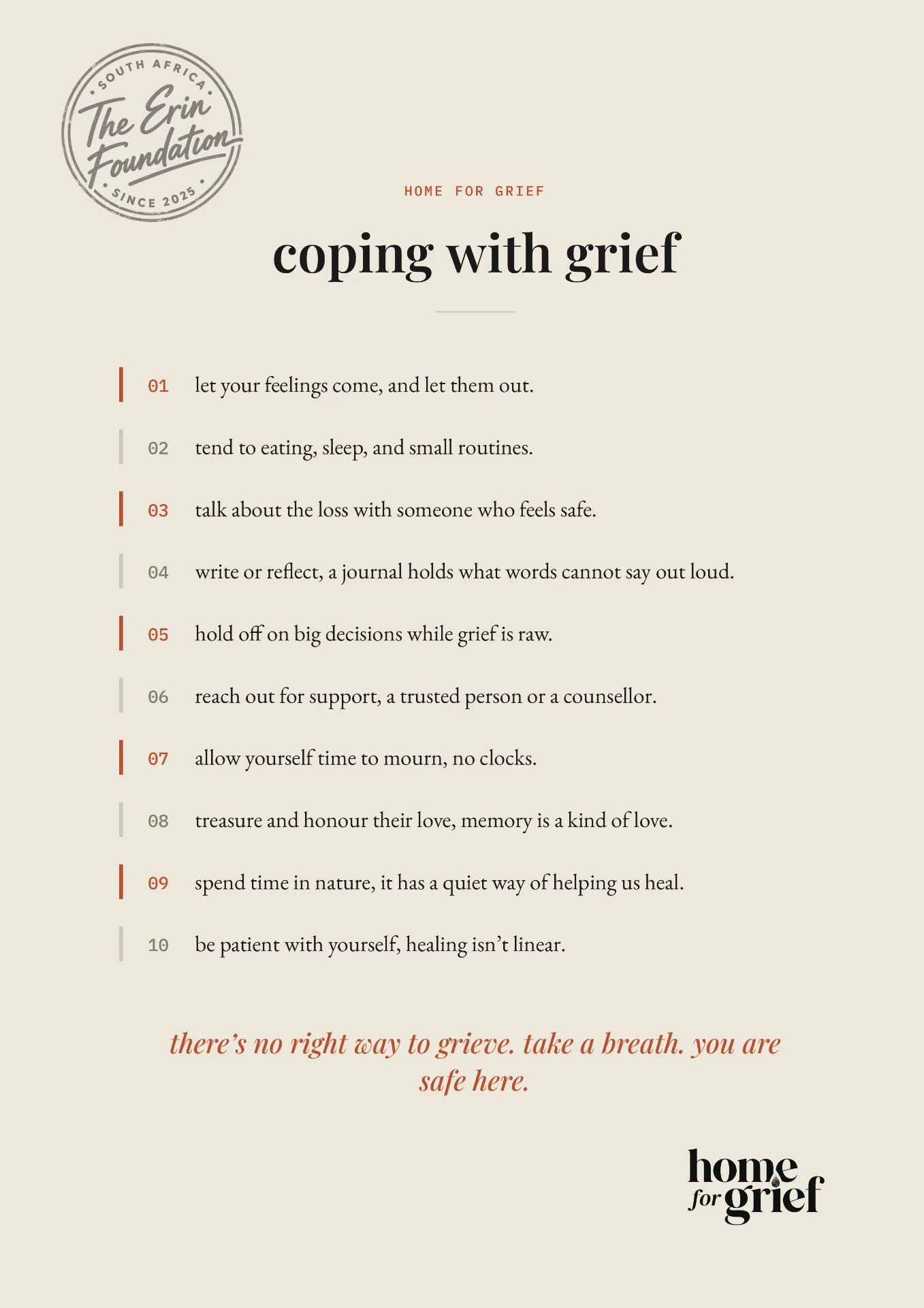
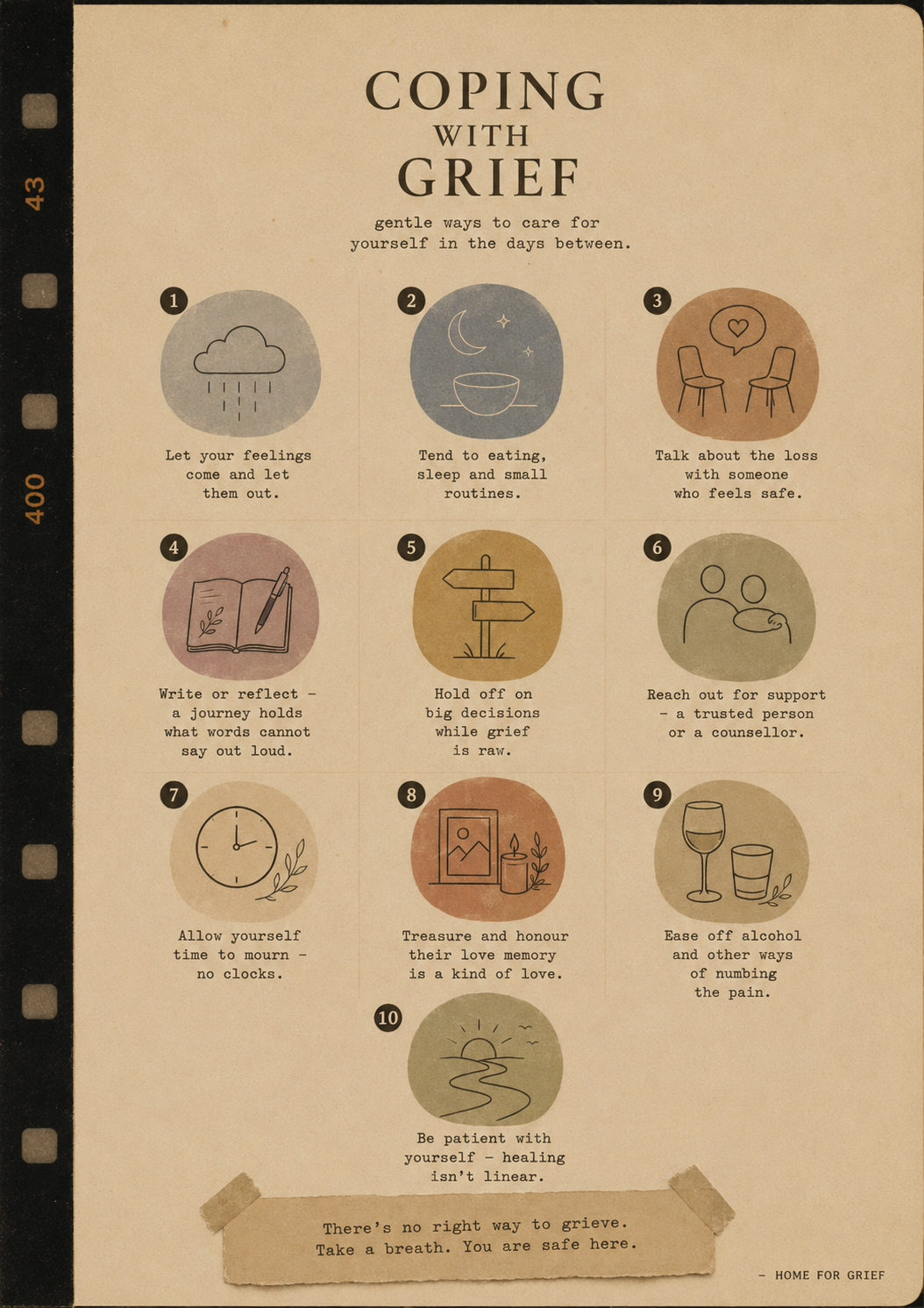
An infographic titled 'Coping with Grief,' from Home for Grief, with ten numbered suggestions arranged in a circle. One: let your feelings come and let them out. Two: tend to eating, sleep and small routines. Three: talk about the loss with someone who feels safe. Four: write or reflect, as a journal holds what words cannot say out loud. Five: hold off on big decisions while grief is raw. Six: reach out for support, a trusted person or a counsellor. Seven: allow yourself time to mourn, with no clocks. Eight: treasure and honour their love, because memory is a kind of love. Nine: ease off alcohol and other ways of numbing the pain. Ten: be patient with yourself, because healing isn't linear. It closes: there's no right way to grieve. Take a breath. You are safe here.

Coping with Grief

There is no right way to grieve, but there are gentle things that can help you carry it. These are small, kind ways to tend to yourself.
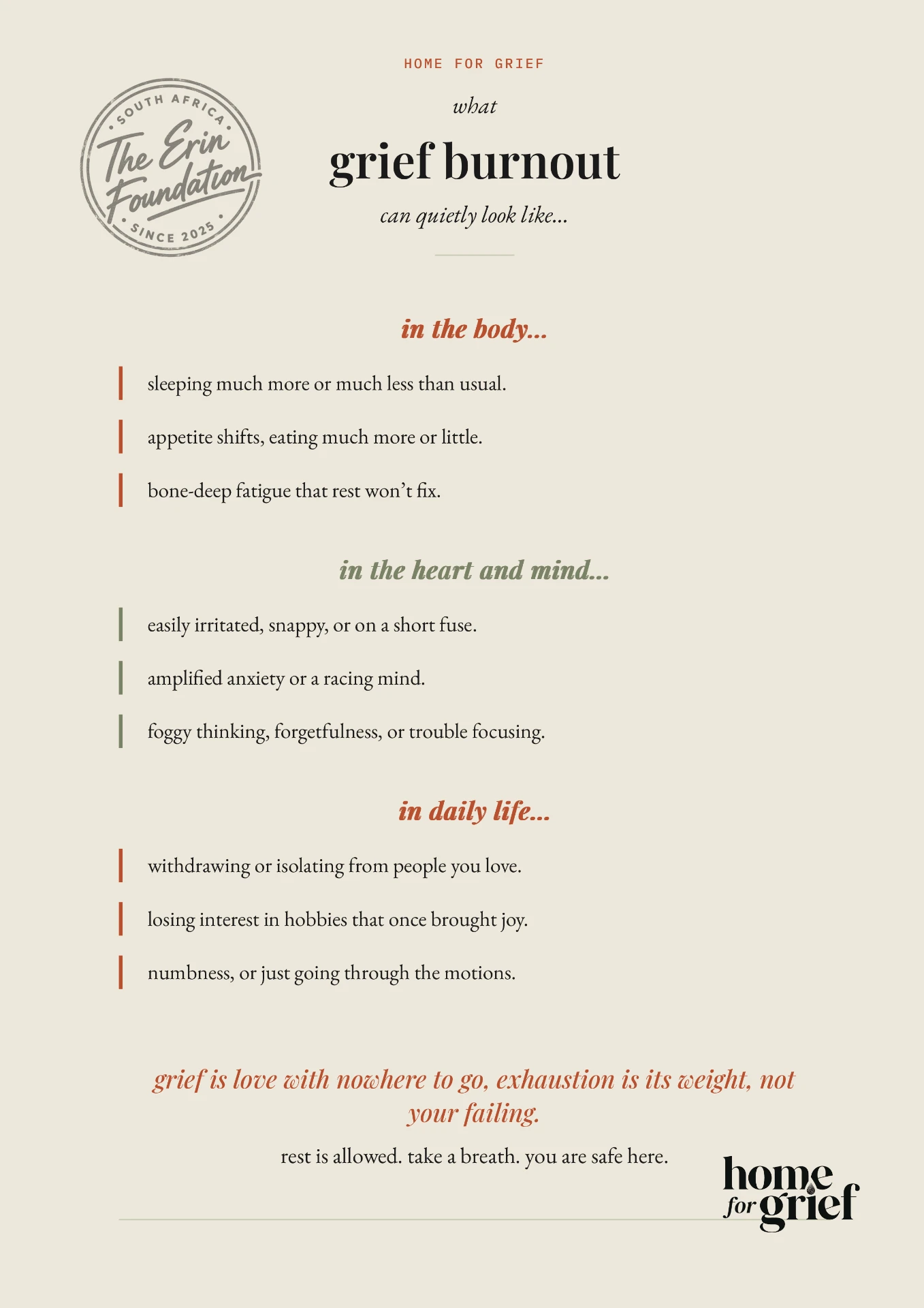
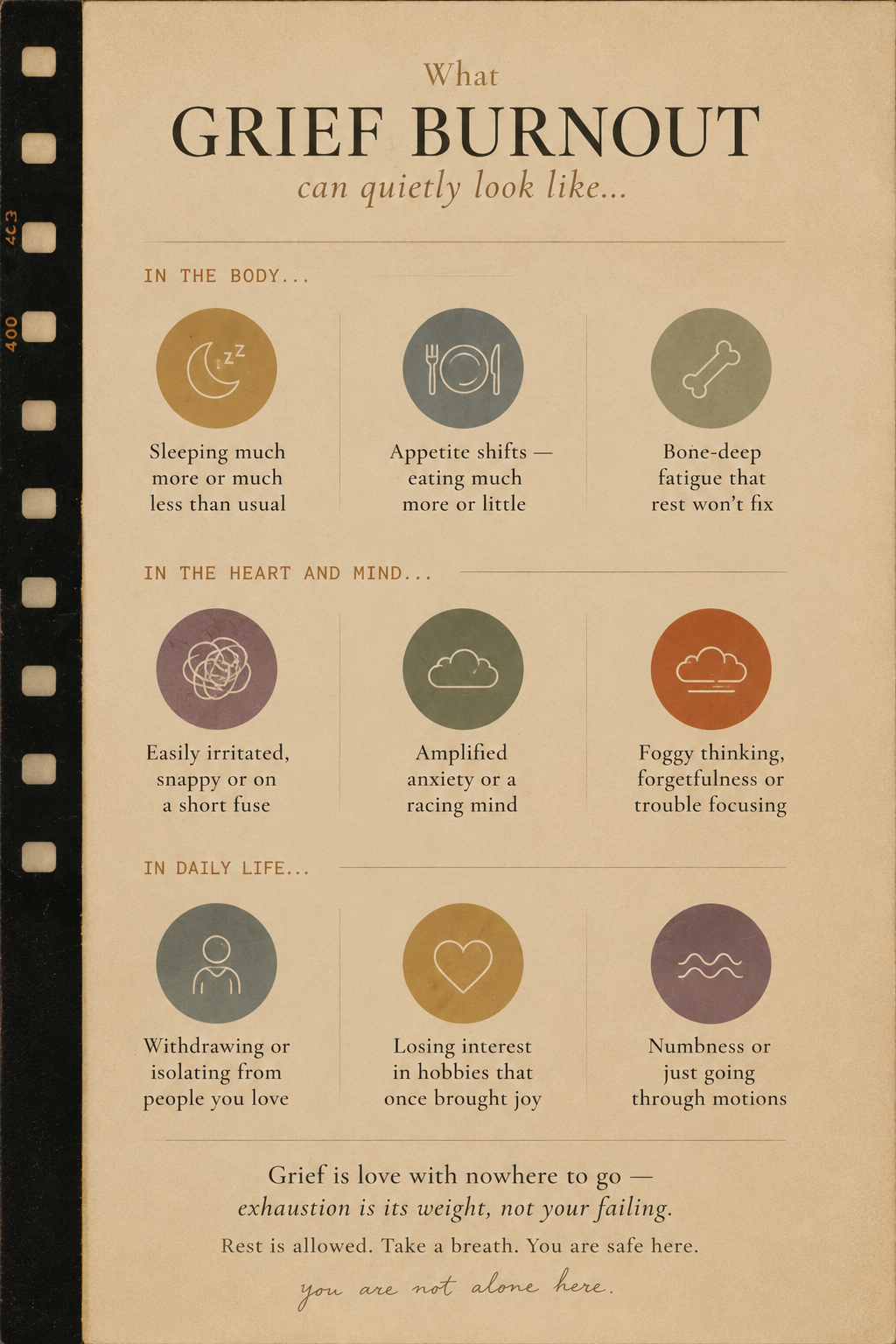
An infographic titled 'What grief burnout can quietly look like,' from Home for Grief. In the body: sleeping much more or much less than usual; appetite shifts, eating much more or little; bone-deep fatigue that rest won't fix. In the heart and mind: easily irritated, snappy or on a short fuse; amplified anxiety or a racing mind; foggy thinking, forgetfulness or trouble focusing. In daily life: withdrawing or isolating from people you love; losing interest in hobbies that once brought joy; numbness or just going through the motions. It closes: grief is love with nowhere to go, exhaustion is its weight, not your failing. Rest is allowed. Take a breath. You are safe here.

Grief Burnout

When you have been carrying grief and daily life for a long time without rest, exhaustion can creep in quietly. These are some of the ways grief burnout can show up, in the body, the heart and mind, and daily life.
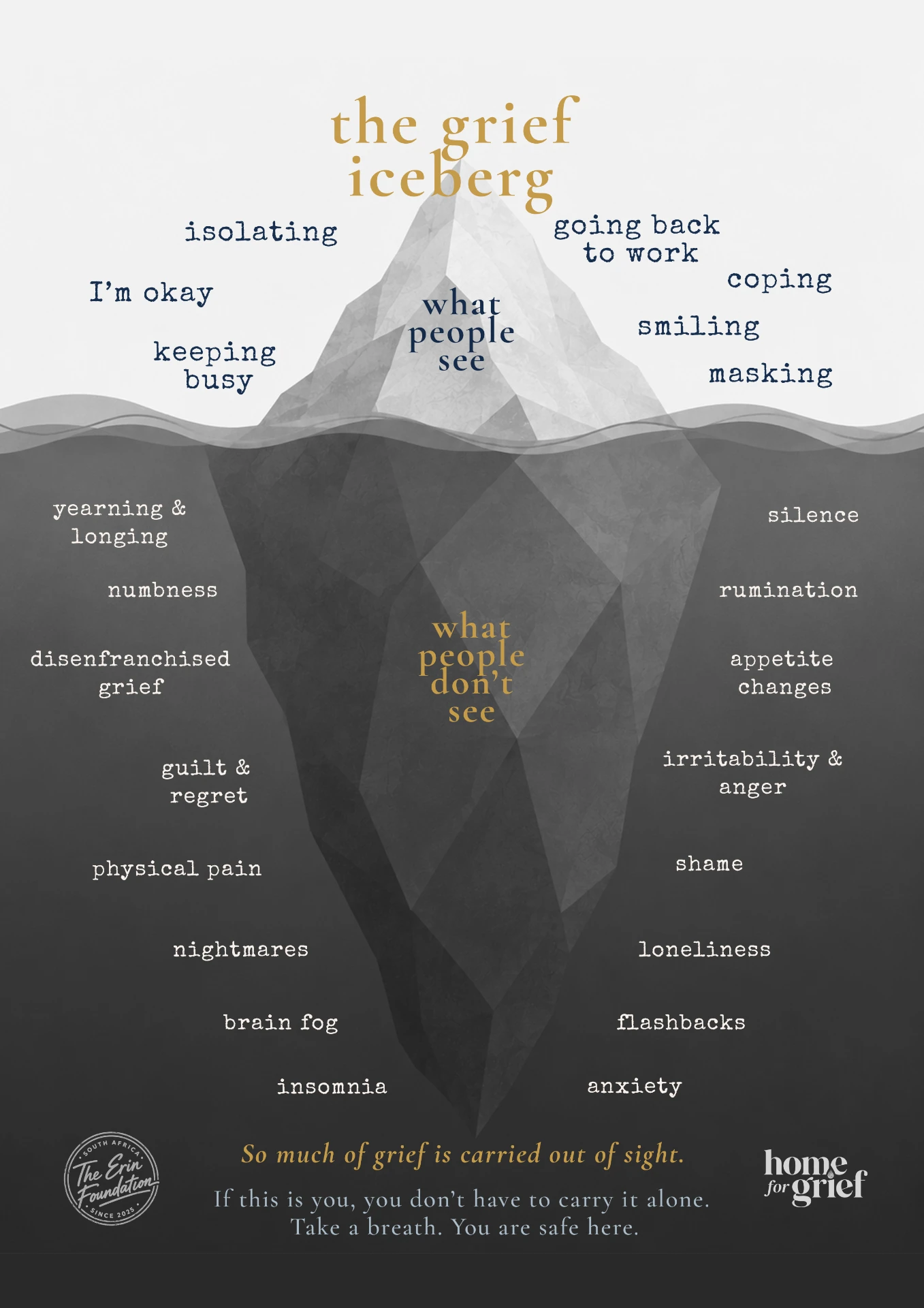
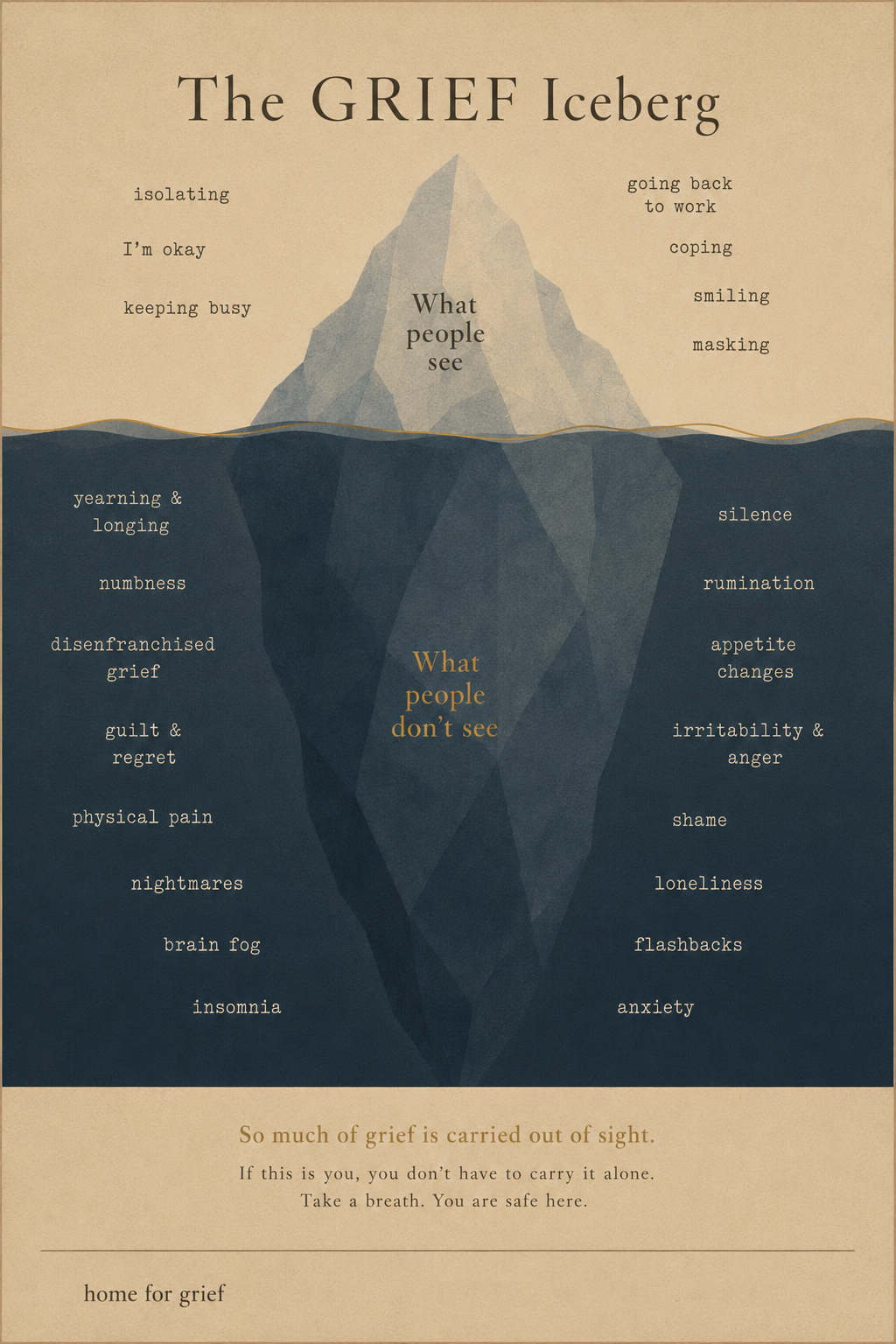
An infographic titled 'The Grief Iceberg,' from Home for Grief, showing an iceberg above and below the waterline. Above the surface, what people see: isolating, going back to work, coping, smiling, masking, keeping busy, and saying 'I'm okay.' Below the surface, what people don't see: yearning and longing, numbness, disenfranchised grief, guilt and regret, physical pain, nightmares, brain fog, insomnia, silence, rumination, appetite changes, irritability and anger, shame, loneliness, flashbacks, and anxiety. It closes: so much of grief is carried out of sight. If this is you, you don't have to carry it alone. Take a breath. You are safe here.

The Grief Iceberg

So much of grief is carried out of sight. What others see is only the surface; beneath it lies everything a grieving person quietly holds.
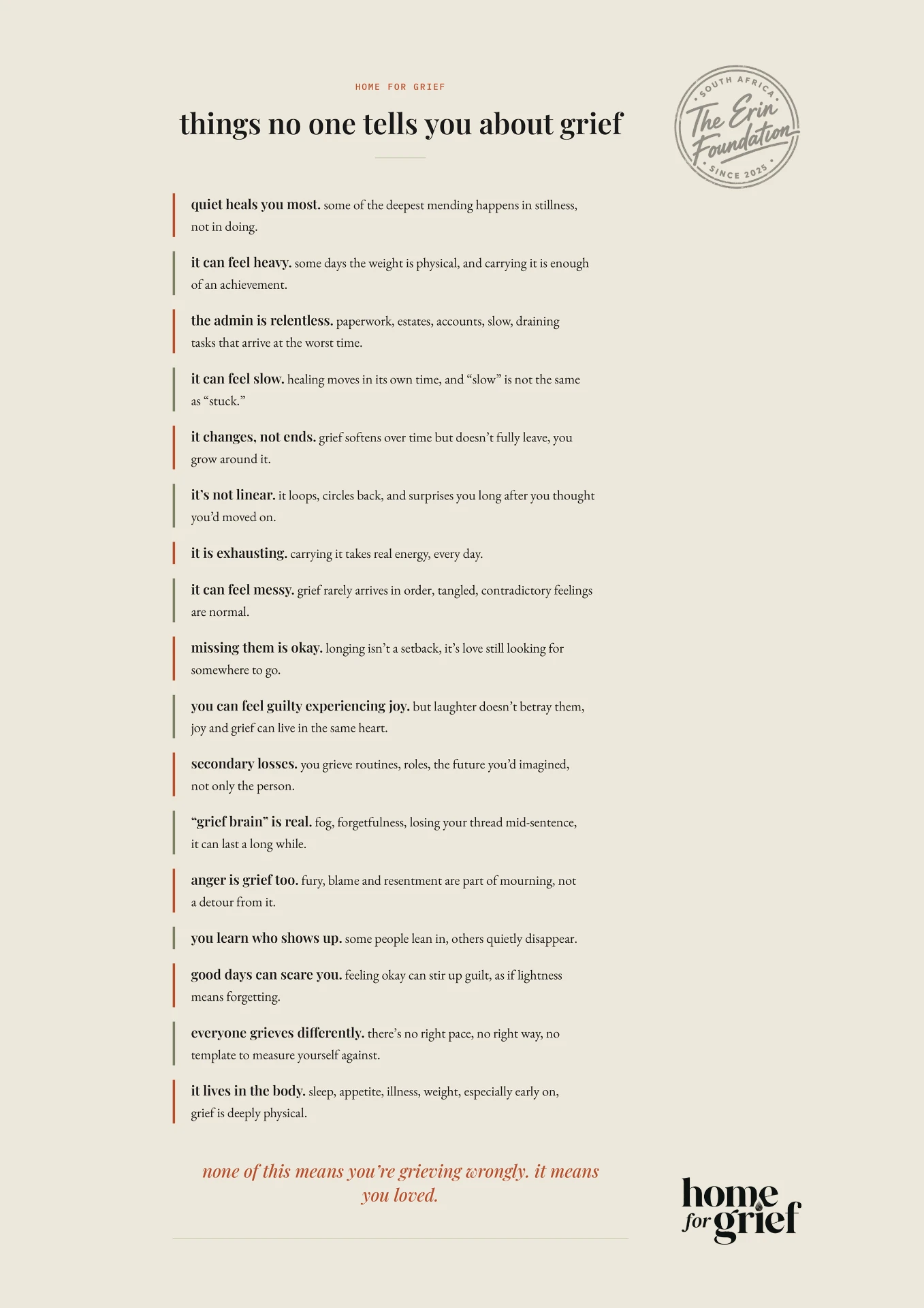
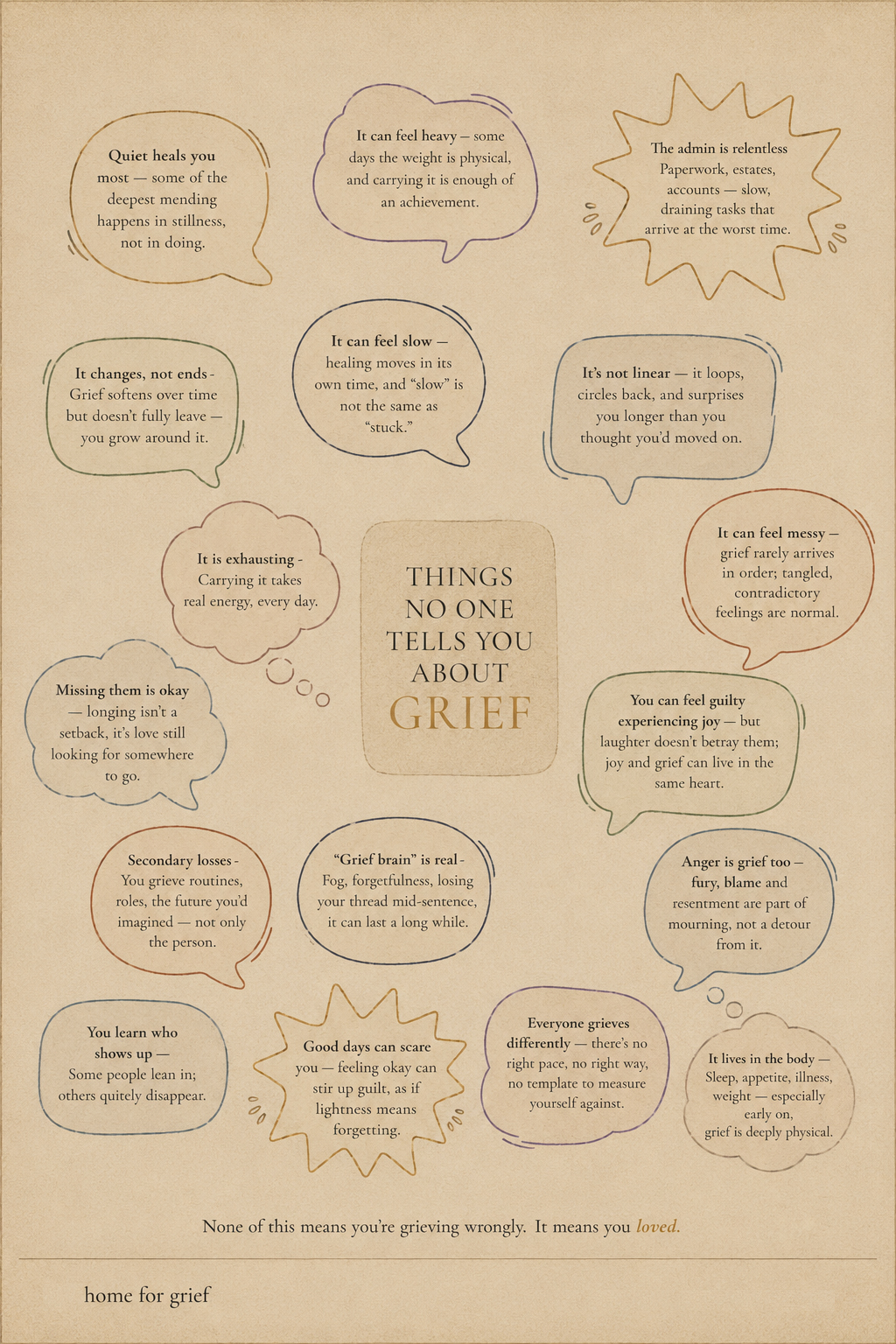
An infographic titled 'Things no one tells you about grief,' from Home for Grief, arranged as speech bubbles. It can feel heavy, slow, and messy, and it is not linear, it loops and circles back long after you thought you'd moved on. It is exhausting and lives in the body, affecting sleep, appetite and health. 'Grief brain' (fog and forgetfulness) is real and can last a long while. Anger is part of mourning, not a detour from it. You grieve secondary losses too: routines, roles, and the future you imagined, not only the person. Missing them is love still looking for somewhere to go, and you can feel guilty experiencing joy, though laughter does not betray them. Everyone grieves differently, with no right pace. You learn who shows up. Quiet heals you most, and grief changes rather than ends, you grow around it. The admin of death is relentless. None of this means you're grieving wrongly. It means you loved.

Things No One Tells You About Grief

Grief holds many surprises that few people warn you about. None of these mean you are grieving wrongly, they mean you loved.

An infographic titled 'Ways to Honour Your Pet Who Has Passed,' from Home for Grief, with ten gentle suggestions: plant a tree or garden in their memory; make a donation to an animal rescue in their name; create a memory box of keepsakes; make or display a keepsake such as paw prints, photos, jewellery or custom artwork; create a memorial space at home or in the garden with photos, a plaque, or meaningful mementos; share their story by talking about them, sharing photos, or creating an online tribute; light a candle or hold a small ritual; create something in their honour, paint, write, knit or craft; keep a memory journal of favourite memories and small moments; and look to the sky, finding comfort in the stars and feeling their presence in a special way.

Ways to Honour Your Pet

There is no right or wrong way to grieve your pet, these are simply gentle ideas, should you want them. Small, tender ways to remember a companion whose love still lives in the spaces they once filled.

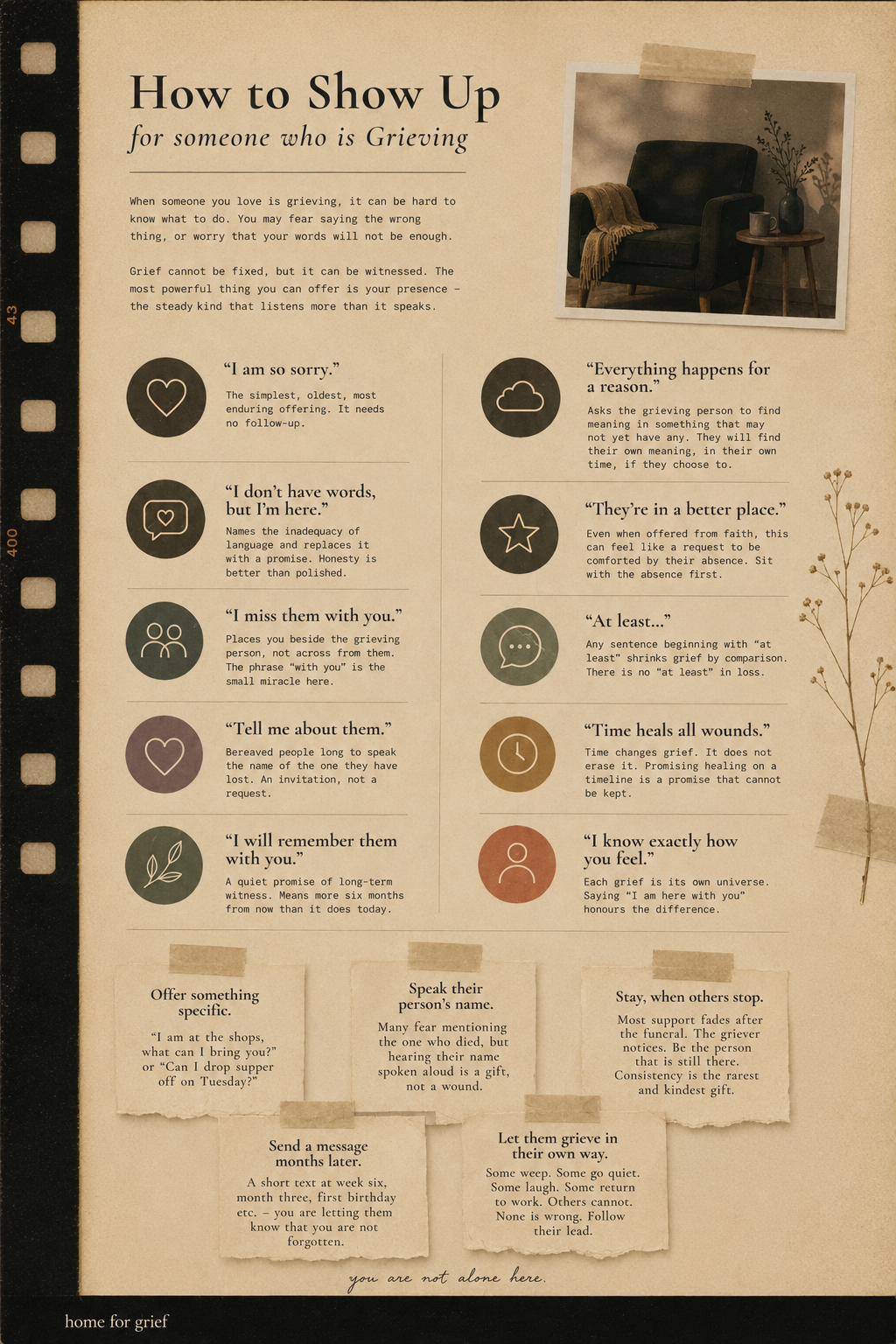
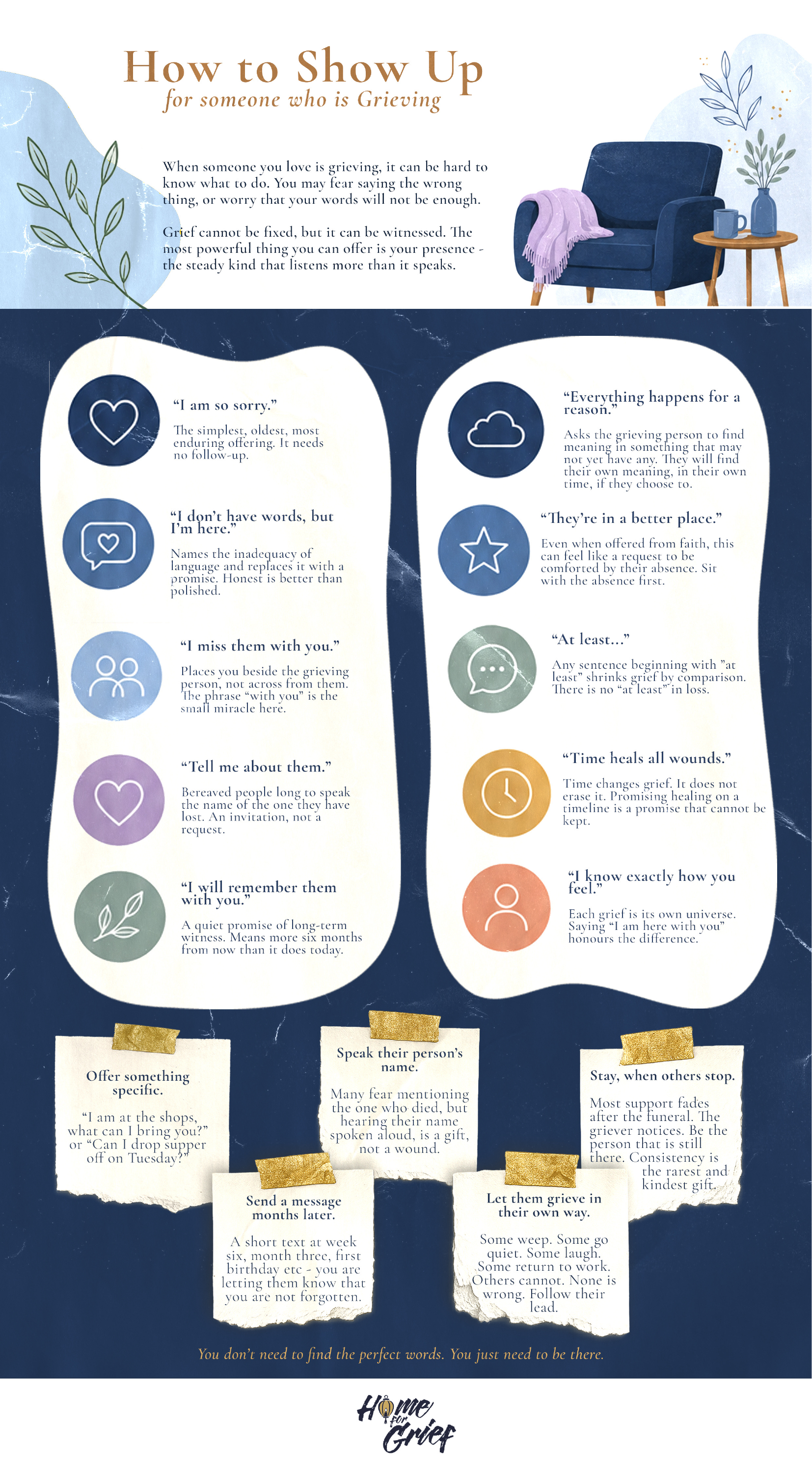
An infographic titled 'How to Show Up for someone who is Grieving,' from Home for Grief. It opens by saying grief cannot be fixed, but it can be witnessed, and the most powerful thing you can offer is your presence. The main section contrasts helpful things to say with phrases that are often harder to hear. Helpful: 'I am so sorry,' 'I don't have words, but I'm here,' 'I miss them with you,' 'Tell me about them,' and 'I will remember them with you.' Harder to hear: 'Everything happens for a reason,' 'They're in a better place,' 'At least...,' 'Time heals all wounds,' and 'I know exactly how you feel.' At the bottom, five torn-paper reminders offer practical ways to stay close: offer something specific, speak their person's name, stay when others stop, send a message months later, and let them grieve in their own way. It closes with 'you are not alone here.'

How to Show Up for Someone Who Is Grieving

You don't need the perfect words. You just need to be there. A gentle guide for friends and family, what helps, what to gently avoid, and the small, steady ways to stay long after others have moved on.