
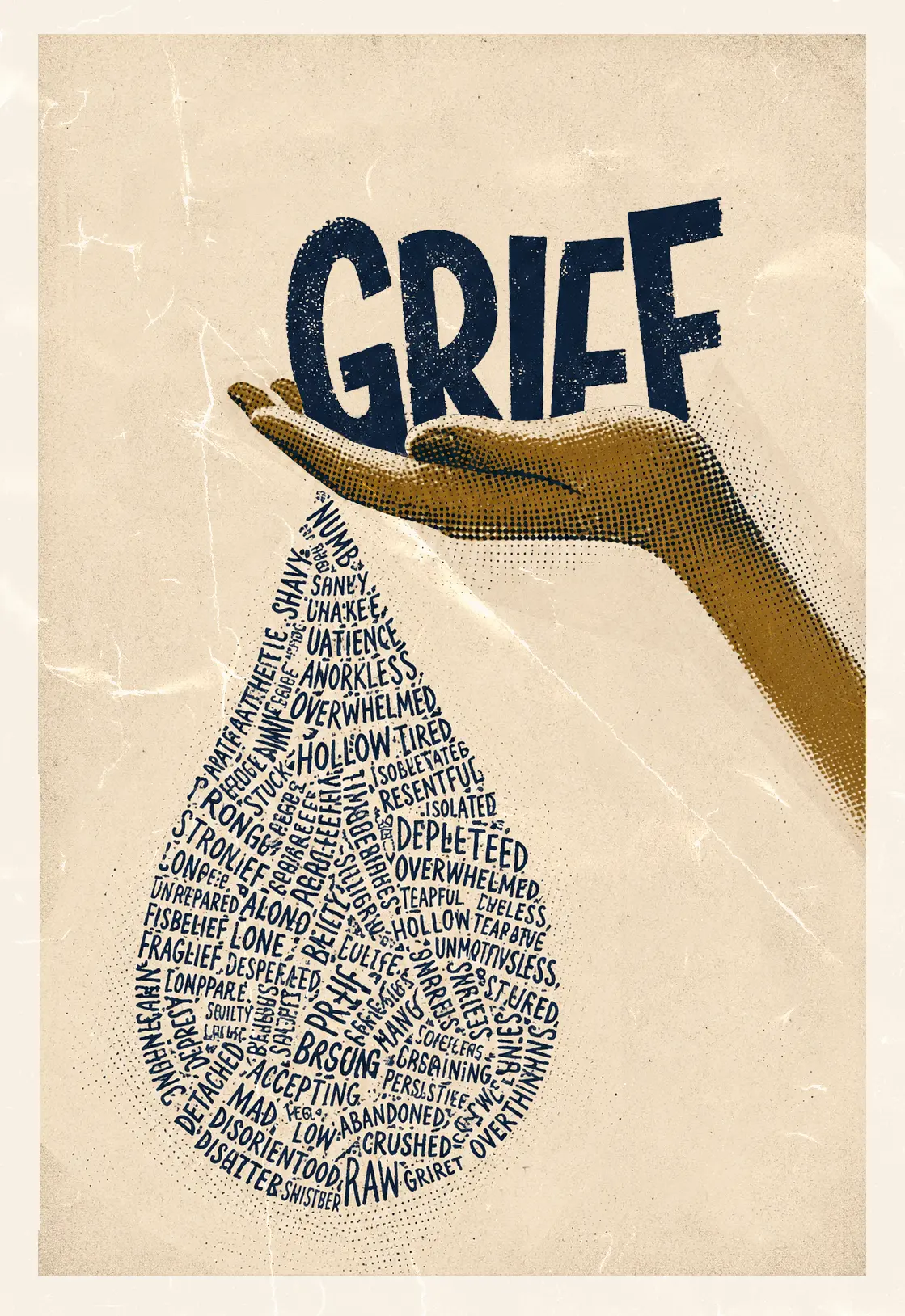
Take what helps and leave the rest.
Part One, The Textures of Grief
The felt experience of grieving, and the everyday language people use to describe it.
A note on the difference: a hangover follows a single wave; fatigue is the ongoing tiredness of carrying loss; burnout is the collapse reached after too long without rest. They overlap, and many people move between them.
Part Two, Sixteen Types of Grief
Forms of grief named in grief literature and popular references. Several overlap, and grief researchers do not all use these exact categories, they are offered here as a map, not a rulebook.
On overlap: Some of these clearly overlap, complicated, chronic, and prolonged grief describe closely related experiences, as do masked and inhibited grief. Overlap is normal. No one's grief needs to fit a single label.
However grief arrives (as a wave, a fog, a sudden burst, or a long weariness) it is not a problem to be solved or a stage to be passed through on schedule. These words exist to help you recognise what you are feeling and to know you are not alone in feeling it. What stays, beneath all of it, is the love. Sometimes that love is a light; sometimes it is a grounding. Either way, it remains.